 PAUL WINTER'S WORLD OF LIVING MUSIC:
EXPLORE PAUL WINTER'S WORLD OF LIVING MUSIC:


Reviews
Other Living Music Grammy Award Winners and Nominees
Other Living Music 'Wilderness Music' titles
Other solo instrumental albums by Living Music artists
Paul Winter's Discography
Living Music by style
All titles
Free draw for Living Music
Special offers
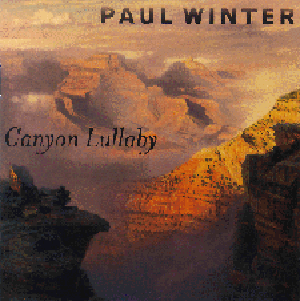
TRACKING
..with the time of day or night the music was recorded, and the wildlife voices which accompanied Paul Winter on each piece.1. CANYON LULLABY (4.30AM) [crickets]
2. FIRST LIGHT (5.15am)
3. HONORING SONG (7.00am) [Mourning Dove, Canyon Wren, White-throated Swift, House Finch]
4. CANYON CHACONNE (7.40am) [House Finch, White-throated Swift, Canyon Wren]
5. DREAM OF THE BASKETMAKER (8.10am) [Canyon Wren, House Finch, Raven]
6. AIR FOR KEETU (10.15am) [House Finch, Canyon Wren, Raven, White-throated Swift]
7. CORNMEAL MEDICINE WHEEL (11.50am) [House Finch]
8. REDBUD SIESTA (1.10pm) [Canyon Wren, House Finch]
9. LIZARD LOUNGE (1.40pm) [Canyon Wren]
10. HUMMINGBIRD'S BALLAD (2.35pm) [House Finch, Hummingbird]
11. AFTERNOON SUN (3.30 pm) [House Finch, Canyon Wren]
12. WALTZ OF THE RAVENS (5.30pm) [Ravens, House Finch, Canyon Wren]
13. LULLABY AT PUMPKIN SPRINGS (8.45pm) [Crickets]
14. DREAMCATCHER (10.20pm) [Crickets, Bat]
15. MARS ON THE RIM (11.00pm) [Crickets, Bats]
16. MIDNIGHT BLUE (12.10am) [Crickets]
17. MOON SHADOWS (1.20am) [Crickets]
18. MUSIC TEMPLE (2.35am) [Crickets]
Paul Winter on the Creation of 'Canyon
Lullaby'
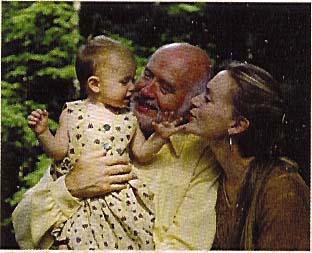
In August of 1996 [...] Chez and I were blessed with the birth of our
first child, a daughter, whom we named Keetu.
Leaving for the Canyon when the baby was only three weeks old was very
difficult for me. [...] My thoughts were constantly with Chez and Keetu,
and it seemed now that every piece I played was a song to them.
I returned [to the Canyon] in 1997, this time with three engineers and
a solar-powered multi-track recording system. It took us collectively a
total of 26 hours to back-pack all the gear in from the River.
I played at all times of the day and night, in concert with whatever wildlife
happened to be giving voice at the time. I began to imagine an album journey
that travelled through twenty-four hours in the life of the Canyon, starting
before dawn and ending in the deep night.
Some of the new melodies had a
lyrical quality similar to traditional lullabies, while others seemed to
have the kind of bitter-sweet longing that Brazilians call 'saudade'.
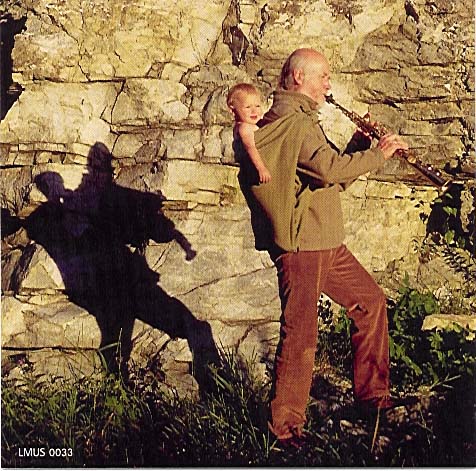
In Ireland I had learnt from my friend, singer Nóirín Ní Riain, about the kinship, in Celtic tradition, between lullabies and lamentations 'that touch more into the psyche than do love affairs or praising the land'. Lullabies originally often had magical vocables and contained magical intervals; they were for the dusky mysterious transition hours and they were meant to speak of a great yearning, of the most tender moments, and of deepest fears. I chose the title CANYON LULLABY because these are songs of my own yearnings, of my feelings for my first-born which have awakened in me a new tenderness for life, and of my deepened sense of awe for this planet as I stood in one of its most profound places. In that great and reverberant space, under the desert sun and the midnight stars, I called out to the Earth and it resounded in response.
Photos by Jennifer Almquist.
Cover painting by Curt Walters.
Notes by Paul Winter taken from 'Canyon Lullaby' booklet



